Master Your Sub-Zero Ice Maker
Sub-Zero ice makers are renowned for their quality and performance, but like any appliance, they can encounter issues that disrupt their functionality. This comprehensive guide will help you troubleshoot common problems with your Sub-Zero ice maker, ensuring you can maintain optimal performance and enjoy a steady supply of ice. You will learn about the most frequent issues, how to diagnose and fix leaks, address unusual noises, and maintain your ice maker effectively. Additionally, we will highlight the benefits of professional repair services, particularly from Sub Zero Repair Newport Beach, which specializes in high-end appliance repair. By the end of this article, you will be equipped with the knowledge to tackle ice maker problems confidently.
What Are the Most Common Sub-Zero Ice Maker Problems?
Sub-Zero ice makers can experience a variety of issues that affect their performance. Understanding these common problems is the first step in troubleshooting effectively.
- No Ice Production: This is one of the most frustrating issues. It can stem from several factors, including power supply problems, water supply issues, or incorrect temperature settings.
- Small or Hollow Ice Cubes: This problem often arises from low water pressure, mineral buildup in the water line or filter, or improper freezer temperatures.
- Ice Maker Leaks: Leaks can occur due to damaged water lines, faulty seals, or clogged or frozen drain lines, leading to water pooling around the unit.
- Unusual Noises: Noises can indicate issues with components like the compressor, fan, or water inlet valve, which may require further investigation.
Identifying these problems early can prevent more significant issues down the line.
Understanding how users approach diagnosing appliance faults can provide valuable insights into effective troubleshooting strategies.
User Fault Diagnosis in Household Appliances
In this study, we ask how conventional users diagnose faults in household appliances and how the design of these appliances facilitates or hampers the process of fault diagnosis.
Practices of fault diagnosis in household appliances: Insights for design, BP Arcos, 2020
Why Is My Sub-Zero Ice Maker Not Making Ice?
If your Sub-Zero ice maker is not producing ice, the first step is to check the power supply. Ensure that the unit is plugged in and that the circuit breaker has not tripped. Next, inspect the water supply; a kinked, blocked, or frozen water line can prevent water from reaching the ice maker. Additionally, evaluate the temperature settings; the freezer should be set between 0°F and 5°F (-18°C and -15°C) for optimal ice production. If these checks do not resolve the issue, it may be necessary to examine the water inlet valve for blockages or malfunctions.
What Causes Small or Hollow Ice Cubes in Sub-Zero Ice Makers?
Small or hollow ice cubes can be a sign of low water pressure, which may be caused by a clogged water filter or a problem with the water supply line. Mineral buildup can also affect ice quality, so regular maintenance of the water filter is essential. Lastly, ensure that the freezer temperature is adequately set; if it is too warm, the ice may not freeze properly, leading to poor quality cubes.
How Can You Diagnose and Fix Sub-Zero Ice Maker Leaks?
Diagnosing and fixing leaks in your Sub-Zero ice maker is crucial to prevent water damage and maintain efficiency.
- Signs of Leaks: Look for puddles around the unit, ice buildup, or unusual noises that may indicate a leak.
- Diagnosing the Source: Check the water supply line for cracks, kinks, or freezing, and inspect the door seals for wear and tear. Also, check the drain line for clogs or ice blockages. If the leak persists, it may be necessary to examine the ice maker’s internal components.
- When to Call a Professional: If the leak is severe or if you are unable to identify the source, it is advisable to contact a professional for repairs. Ignoring leaks can lead to significant water damage and costly repairs.
What Are the Signs of Water Leaking from a Sub-Zero Ice Maker?
Common signs of water leaking from a Sub-Zero ice maker include puddles forming around the base of the unit, ice buildup in the freezer compartment, and unusual noises that may indicate water pooling in areas it shouldn’t. Regularly checking for these signs can help you catch leaks early.
When Should You Call a Professional for Ice Maker Leak Repairs?
If you notice persistent leaks or if the source of the leak is difficult to identify, it is best to call a professional. Factors such as the severity of the leak, potential for water damage, and the complexity of the repair should guide your decision. Professional technicians can quickly diagnose and resolve issues, ensuring your ice maker operates efficiently.
What Are Effective Solutions for Unusual Noises from Your Sub-Zero Ice Maker?
Unusual noises from your Sub-Zero ice maker can indicate underlying issues that need attention.
- Identify Noise Sources: Common components that may cause noise include the compressor, fan, and water inlet valve. Each of these parts can produce distinct sounds that may signal a problem.
- Troubleshooting Noises: Start by checking for loose parts or debris that may be obstructing the fan. If the noise persists, it may be necessary to consult a technician for further evaluation.
- When to Seek Expert Repair: If you are unable to resolve the noise issue through basic troubleshooting, it is advisable to seek professional help. Technicians can accurately diagnose the problem and perform necessary repairs.
Which Ice Maker Components Cause Noises?
The compressor is often the source of humming or buzzing sounds, while the fan may produce rattling noises if obstructed. The water inlet valve can also create clicking sounds when it opens and closes. Understanding these components can help you identify the source of the noise.
How to Troubleshoot and When to Seek Expert Repair?
Begin troubleshooting by checking for loose parts and ensuring that the ice maker is level. If the noise continues, it may indicate a failing component that requires professional assessment. Seeking expert repair is advisable when the noise is persistent and disruptive, as it may prevent further damage to the unit.
Indeed, the role of comprehensive user manuals is often critical in empowering individuals to diagnose and address common appliance issues effectively.
User Manuals for Household Appliance Fault Diagnosis
Product repairs are at the core of sustainable consumption and user manuals can play a relevant role in facilitating them. They are the accredited source of product information for end users and are therefore sought as an important means for the diagnosis and subsequent repair of household appliances. However, despite increasing societal demand for repairable products, few studies have been conducted on the extent to which manuals contribute to the fault diagnosis and subsequent repair process.
How user manuals support the diagnosis of common faults in household appliances: An analysis of 150 manuals, B Pozo Arcos, 2023
How Do You Maintain Your Sub-Zero Ice Maker for Optimal Performance?
Regular maintenance is essential for keeping your Sub-Zero ice maker running smoothly and efficiently.
- Cleaning Schedule: Establish a routine cleaning schedule to remove any buildup of ice or debris. This will help maintain optimal performance and prevent issues.
- Water Filter Replacement: Regularly replace the water filter according to the manufacturer’s recommendations to ensure clean water supply and prevent mineral buildup.
- Monitoring Temperature Settings: Keep an eye on the freezer temperature to ensure it remains at the optimal level for ice production.
When and How Should You Replace the Water Filter?
Water filters should typically be replaced every six months, or sooner if you notice a decline in ice quality or slower ice production. To replace the filter, locate the filter compartment, remove the old filter, and install the new one according to the manufacturer’s instructions. This simple step can significantly improve the quality of ice produced.
Why Is Cleaning Condenser Coils Important?
Cleaning the condenser coils is crucial for maintaining efficiency. Dust and debris can accumulate on the coils, leading to overheating and reduced performance. Regular cleaning helps ensure that the ice maker operates efficiently, prolonging its lifespan and preventing costly repairs.
Why Choose Sub Zero Repair Newport Beach for Your Ice Maker Repair Needs?
When it comes to repairing your Sub-Zero ice maker, choosing a qualified service provider is essential. Sub Zero Repair Newport Beach specializes in high-end appliance repair, ensuring that your ice maker receives the best care possible.
- Licensed and Insured Technicians: Our team consists of licensed and insured technicians who are trained to handle Sub-Zero appliances with expertise.
- Use of Genuine OEM Parts: We exclusively use 100 percent genuine OEM parts, ensuring that your appliance is repaired to the highest standards.
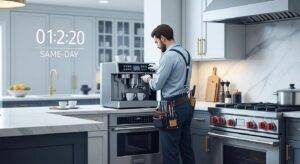
- Same-Day Service Availability: We understand the importance of having a functional ice maker, which is why we offer same-day service to address your repair needs promptly.
What Are the Benefits of Using Licensed Technicians and Genuine OEM Parts?
Using licensed technicians ensures that repairs are performed correctly and safely, while genuine OEM parts guarantee compatibility and reliability. This combination provides peace of mind and long-term performance for your appliance.
How Does Same-Day Service and Local Expertise Enhance Your Repair Experience?
Our same-day service means you won’t have to wait long to have your ice maker repaired. Additionally, our local expertise allows us to understand common issues faced by Sub-Zero appliances in the Newport Beach area, enabling us to provide tailored solutions that meet your specific needs.
What Is the Step-by-Step Process for Professional Sub-Zero Ice Maker Repair?
Understanding the repair process can help you feel more confident when seeking professional assistance for your Sub-Zero ice maker.
- Diagnosis Steps: Technicians will begin with an initial assessment to identify the problem. This may involve checking the power supply, water supply, and internal components.
- Common Repair Actions: Depending on the diagnosis, common repair actions may include replacing faulty parts, cleaning components, or adjusting settings to restore functionality.
- Post-Repair Checks: After repairs are completed, technicians will perform checks to ensure that the ice maker is functioning correctly and efficiently.
How Do Technicians Diagnose Ice Maker Issues?
Technicians use a systematic approach to diagnose ice maker issues, starting with visual inspections and testing components. They may also utilize diagnostic tools to pinpoint problems accurately, ensuring that repairs are effective.
Specialized fault detection and diagnosis methods are crucial for complex refrigeration systems like ice makers, ensuring optimal performance and preventing energy waste.
Fault Detection & Diagnosis for Ice Refrigeration Systems
Fault detection and diagnosis (FDD) is an important part to maintain the performance, improve the reliability and prevent energy wastage of the refrigeration systems. Binary ice systems, which have become more commonly employed in both industry and domestic applications, are essentially refrigeration systems using water-ice slurry mixture as a secondary refrigerant. The existence of the ice makes binary ice systems different from conventional liquid chillers, leading to the requirement of a specified FDD method. Therefore, the current research focuses on developing a model based dynamic FDD approach that can capture the unique features of binary ice systems in order to detect some pre-selected faults, including binary ice flow restriction, cooling water flow restriction, incorrect solution concentration, ice generator scraper fault and ice generator motor failure.
Development of a fault detection and diagnosis approach for a binary ice system, 2015
What Repair Actions Are Commonly Performed?
Common repair actions include replacing the water inlet valve, cleaning the condenser coils, and adjusting temperature settings. These actions help restore the ice maker’s functionality and improve its overall performance.
Frequently Asked Questions
How often should I clean my Sub-Zero ice maker?
It is recommended to clean your Sub-Zero ice maker at least once every six months. Regular cleaning helps remove any ice buildup, debris, or mineral deposits that can affect performance. Establishing a routine cleaning schedule not only ensures optimal ice production but also prolongs the lifespan of the appliance. If you notice any unusual odors or a decline in ice quality, consider cleaning it more frequently. Always refer to the manufacturer’s guidelines for specific cleaning instructions.
What should I do if my ice maker is making a strange smell?
If your Sub-Zero ice maker is emitting a strange smell, it could be due to food particles or mold buildup inside the unit. Start by cleaning the interior thoroughly, including the ice bin and any removable parts. Check the water filter as well; a clogged filter can lead to unpleasant odors. If the smell persists after cleaning, it may indicate a more serious issue, such as a malfunctioning component, and you should consider contacting a professional for further inspection.
Can I troubleshoot my ice maker without professional help?
Yes, many common issues with Sub-Zero ice makers can be diagnosed and resolved without professional help. Basic troubleshooting steps include checking the power supply, inspecting the water line for kinks or blockages, and ensuring the freezer temperature is set correctly. However, for more complex problems, such as internal component failures or persistent leaks, it is advisable to seek professional assistance to avoid further damage to the appliance.
What are the benefits of regular maintenance for my ice maker?
Regular maintenance of your Sub-Zero ice maker ensures optimal performance and longevity. It helps prevent common issues such as ice production problems, leaks, and unusual noises. By routinely cleaning the unit, replacing the water filter, and monitoring temperature settings, you can maintain high ice quality and efficiency. Additionally, proactive maintenance can save you money on repairs and energy costs in the long run, as a well-maintained appliance operates more efficiently.
How can I tell if my ice maker needs repairs?
Signs that your Sub-Zero ice maker may need repairs include inconsistent ice production, unusual noises, leaks, or a strange smell. If you notice any of these issues, it’s essential to investigate further. Check for simple problems like blocked water lines or incorrect temperature settings first. If these do not resolve the issue, it may be time to contact a professional technician to diagnose and repair the appliance effectively.
What should I do if my ice maker is producing ice too slowly?
If your Sub-Zero ice maker is producing ice slowly, first check the water supply for any blockages or kinks in the line. Low water pressure can significantly affect ice production. Additionally, ensure that the freezer temperature is set correctly, ideally between 0°F and 5°F (-18°C and -15°C). If these adjustments do not improve the situation, consider inspecting the water inlet valve for malfunctions or clogs, or consult a professional for further assistance.